
What Size Water Softener Do I Need? A Costa Mesa Sizing Guide
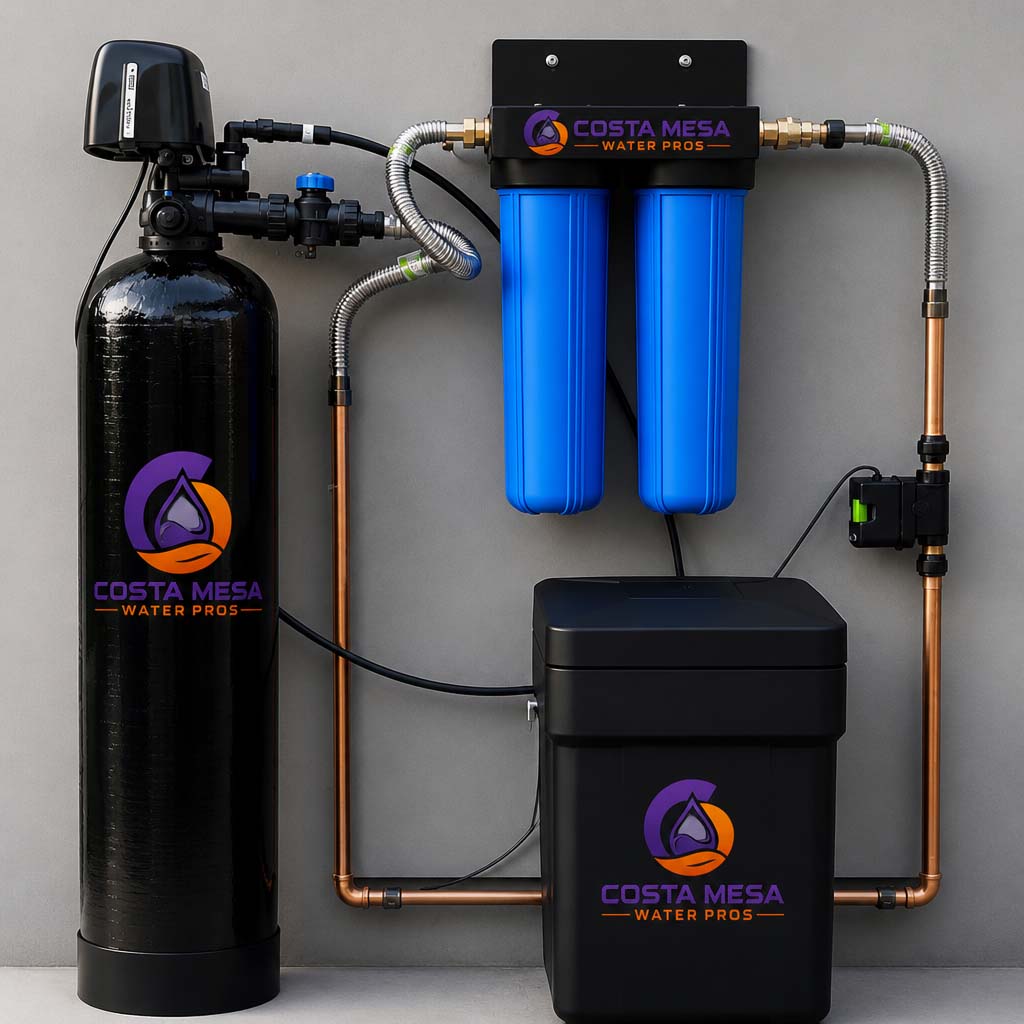
You've decided your Costa Mesa home needs a water softener. The next question — what size do I need? — is where most homeowners stall, and it decides whether the system keeps up with your household. Buy too small and hard water bleeds through between regenerations; buy too big and you waste salt and water on capacity you never touch.
Softener size is not really about the physical tank. It is about grain capacity: how much hardness the resin can remove before it has to recharge. Getting that number right starts with two local facts — how hard Costa Mesa's water actually is, and how much water your household runs in a day. This guide walks through the full calculation with the real numbers for homes served by Mesa Water.
- Water softeners are sized by grain capacity, not tank size — the grains of hardness the resin removes before it regenerates.
- The core formula is people, times daily gallons, times water hardness in grains per gallon, times the days you want between regenerations.
- Costa Mesa's groundwater averages about 6.6 grains per gallon, but some wells test as high as 17, so a real test beats an estimate.
- The water industry commonly plans for roughly 75 to 80 gallons of water use per person per day.
- A typical three-to-four-person Costa Mesa home usually lands on a 32,000-grain softener.
- Iron, well water, and very high flow rates all push the right size upward, so account for them before you buy.
Softener Size Means Grain Capacity, Not Tank Size
A water softener's size is its grain capacity — the total grains of hardness it removes before the resin bed has to regenerate. One grain of hardness equals 17.1 milligrams per liter of dissolved calcium and magnesium, and a softener's rating (24,000, 32,000, 48,000 grains and up) tells you how many grains it clears between recharges. The physical tank matters for flow, but the grain number decides whether the unit keeps your household in soft water.
Inside the tank, resin beads trade their sodium ions for the calcium and magnesium that make water hard; once the beads are saturated, a regeneration cycle rinses them with brine and resets the bed. As Penn State Extension explains, that ion-exchange process is the heart of every softener, and each regeneration uses roughly 50 gallons of water. The point of sizing is to land a system that regenerates every several days — not daily, which wastes salt and water, and not on a bed so small it falls behind during a busy morning.
Step 1: Measure Your Water's Hardness
Start with the hardness of the water entering your home, because it drives everything else in the math. In Costa Mesa, that water comes from Mesa Water District, which draws a 100 percent local groundwater supply from the Orange County Groundwater Basin and is the only district in Orange County to do so. According to Mesa Water District's water quality report, the groundwater averages 113 milligrams per liter as calcium carbonate — about 6.6 grains per gallon — and ranges from 1.2 to 17 grains per gallon across its wells.
By the USGS hardness scale, 113 milligrams per liter falls in the moderately hard band of 61 to 120, so most Costa Mesa homes are not fighting extreme hardness. The top of that well range, though, is firmly very hard. An average is a planning figure, not your figure: a quick on-site water test returns the grains-per-gallon reading for your own tap, and that is the number you size around.
Step 2: Add Up Your Household's Daily Water Use
Next, estimate how much water your household uses in a day, since every gallon carries hardness the softener has to strip out. The water industry commonly plans around 75 to 80 gallons per person per day for whole-house softening. Penn State Extension's worked example uses 75 gallons per person, which lines up with typical indoor use once bathing, laundry, dishwashing, and the kitchen tap are added together.
Multiply that per-person figure by the number of people in your home. A four-person household at 75 gallons each runs about 300 gallons a day. If your home has high-flow fixtures, frequent guests, or a big soaking tub, round the per-person number up rather than down — undersizing costs you more than a little spare capacity ever will.
Step 3: Run the Grain Capacity Math
Now combine the two. The standard sizing formula is people, times gallons per person per day, times hardness in grains per gallon, which gives the grains of hardness removed each day. Multiply that daily figure by the number of days you want between regenerations; seven to ten days is the common target for efficient operation.
Work it through for a typical Costa Mesa home. Four people times 75 gallons times 6.6 grains per gallon is about 1,980 grains of hardness a day. Over seven days that is roughly 13,900 grains. Because resin loses some efficiency as it loads up and you want headroom for heavier weeks, the usual practice is to choose the next standard size above the weekly total. Here that points to a 24,000- or 32,000-grain unit, with the larger size giving longer stretches between recharges. Homes with harder water or more people climb from there.
| Household size | Est. daily use | Grains/day at 6.6 gpg | Suggested grain capacity |
|---|---|---|---|
| 1–2 people | About 150 gallons a day | Around 990 grains a day | 24,000-grain softener fits |
| 3–4 people | About 300 gallons a day | Around 1,980 grains a day | 32,000-grain softener fits |
| 5–6 people | About 450 gallons a day | Around 2,970 grains a day | 40,000 to 48,000-grain softener fits |
| Larger or very hard water | 525 or more gallons a day | 3,400 or more grains a day | 48,000 to 64,000-grain softener fits |
For most Costa Mesa homes on Mesa Water, a 32,000-grain softener is the sensible default; a measured hardness test tells you whether to move up or down.
Have a question about your water? Start with a free on-site test.
Get a Free Water TestStep 4: Adjust for Iron, Well Water, and High Flow
The base formula assumes municipal water with no iron, and three things change the answer. First is iron: softeners remove dissolved iron, but it eats into capacity, so add roughly 4 to 5 grains per gallon to your hardness figure for every 1 milligram per liter of iron. Second is a private well: well water near Costa Mesa can carry iron, sediment, and seasonal swings a softener alone will not handle, which is why well homes usually pair sizing with dedicated well water filtration and treatment. Third is flow rate: a large house running several fixtures at once needs enough service flow that the softener does not starve, so check the rated gallons per minute, not just the grain number.
If sodium matters in your household, remember that softening adds some to the water — Penn State Extension puts it at about 7.5 milligrams per quart for each grain of hardness removed. Homes watching sodium often keep a reverse-osmosis tap for drinking, or use a salt-free water conditioner for part of the house instead of softening everything.
Common Sizing Mistakes to Avoid
The two failure modes pull in opposite directions. An undersized softener regenerates too often: it burns through salt, wastes water on extra cycles, and still lets hard water slip past when demand spikes — the exact scale and spotting you installed it to stop. An oversized softener has its own trouble, because water moving through a bed that is rarely exhausted can channel and regenerate inefficiently.
Right-sizing is the middle path: enough capacity to regenerate every several days under your real demand, with modest headroom for guests or a hot summer. That is also why the cheapest big-box unit and the largest one on the shelf are both usually the wrong call. Match grain capacity to your measured hardness and household, back it with professional water softener installation, and the system runs efficiently for years.
Frequently Asked Questions About Water Softener Size
What size water softener do I need for a family of four in Costa Mesa?
For a typical four-person home on Mesa Water's moderately hard supply, around 6.6 grains per gallon, a 32,000-grain softener is the common choice. It removes roughly 1,980 grains a day and regenerates about once a week. Confirm it with a hardness test, since some Costa Mesa wells run much harder than the district average.
Is a bigger water softener always better?
No. An oversized softener regenerates infrequently, which can let the resin channel and waste salt. The efficient choice matches grain capacity to your measured hardness and daily use with only modest headroom, not the largest unit on the shelf.
How do I find my home's exact water hardness?
Mesa Water publishes an average for the district, but your own tap can differ. An on-site water test measures your actual grains per gallon in minutes, and that is the number to size the softener around. It also flags iron or other issues that quietly change the math.
How often should a correctly sized softener regenerate?
Every seven to ten days is the usual efficiency target. Regenerating daily usually signals an undersized unit, while stretching past two weeks can mean it is oversized. The sizing formula is built to land in that weekly window for your specific household.
Does a water softener add salt to my water?
It adds a small amount of sodium — about 7.5 milligrams per quart for each grain of hardness removed, per Penn State Extension. For most people that is minor, but households on low-sodium diets often add a reverse-osmosis drinking tap or use a salt-free conditioner for part of the home.
Related Services
Have a Water Question? Start With a Free Test
Book a free on-site water test and get real readings for your Costa Mesa home.